

This post is part one in a five part series on the problems with traditional project management tools. Stay tuned for more!
Project Management tools are easy to rag on — they’re one of those categories of software that are almost universally despised by the people who have to use them. The current standards, whether dedicated tools like Microsoft Project or co-opted tools like Excel and email, are in use more because they’re what we’ve always done rather than because they’re well-suited to solve people’s problems.
It’s worth digging in a little to really understand why that’s true. Those tools — at least the purpose-built ones — weren’t designed to be cruel torture devices or to waste massive amounts of time and money. For reference, according to the Project Management Institute’s 2017 global project management survey an average of US$97 million is wasted for every US$1 billion invested in project management. That’s not a great success rate.
We believe there are five things wrong with those tools and the philosophy behind them — this is the first post in a series that will explain each in turn.
Old Tools, New Rules
Microsoft Project launched 33 years ago and it’s still the status quo of project management today. The world has changed a tremendous amount since then, with our businesses evolving into almost completely different environments, complete with radically new technologies and a greatly accelerated pace. It’s time for new tools that match the new rules.
The first version of Microsoft Project was released for MS DOS in 1984. Here’s a somewhat more recent screenshot of what it looked like:
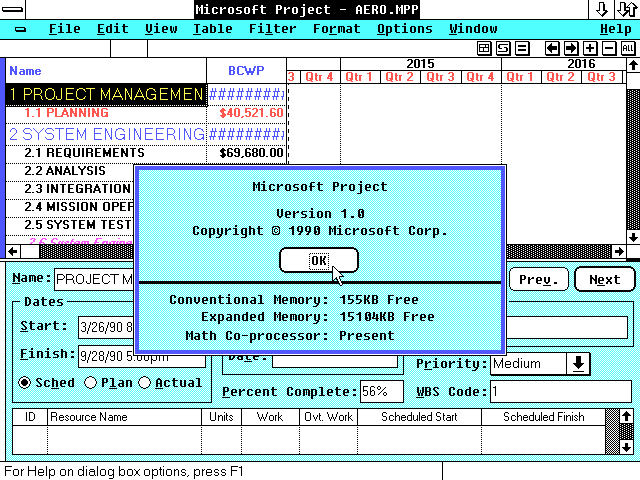
The world has changed a lot in the intervening 33 years. That’s a lot of Gantt charts inflicted on hapless project teams. Thousands and thousands of person-years of status meetings. Some people’s entire careers have gone by since that fateful first release without any real change in the status quo.
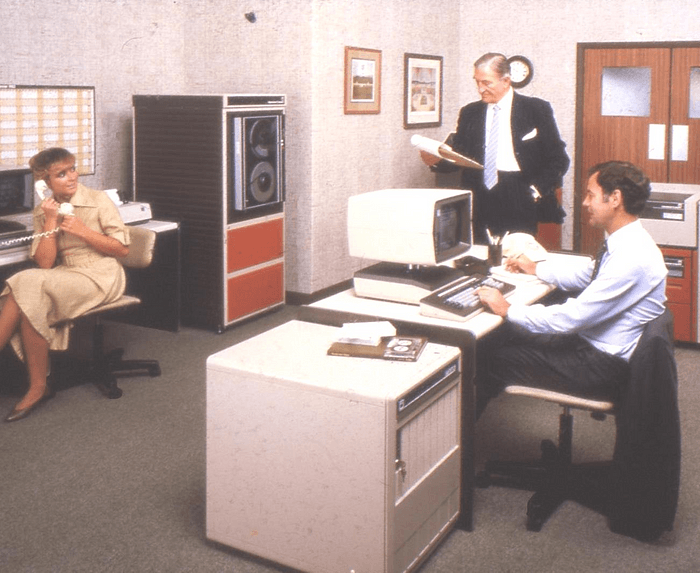
The world your project management tools come from
Imagine how different running a project was three decades ago. Most people on the project team probably didn’t have computers on their desks, so many dots lost their lives to dot matrix printouts of endless project plans. The pace of business was notably slower because the technology simply didn’t support it going any faster. A waterfall Gantt chart was a pretty reasonable way to manage a group of people doing something together, especially if most of them were in the same physical location and teleconferences had yet to become a regular part of the day.
Fast forward to today. We have always connected supercomputers in our pockets. We’re online 24/7 and can videoconference in HD from almost anywhere on the planet. We’re chatting on Slack with people around the world while we collaborate through tools like SenseiOS® in real-time. It’s no big surprise that the old tools just aren’t up to managing today’s projects. It’s not the tools themselves that are the problem, but rather the underlying philosophy that you can actually manage or control a project that moves at the pace of today’s world.
Frequently asked questions
Why are traditional project management tools so widely disliked?
Because they encode a philosophy from a slower, co-located, data-poor world. Microsoft Project shipped for MS-DOS in 1984 and is still the default; Excel and email were never designed for the job. The tools assume a project can be planned and controlled from a Gantt chart, which no longer matches how work happens at today's pace, which is why users tolerate them rather than like them.
How much money is wasted through poor project management?
According to the Project Management Institute's 2017 global survey cited in the article, an average of US$97 million is wasted for every US$1 billion invested in project management, nearly ten percent. The waste isn't mainly bad execution; it's the mismatch between decades-old tools and the speed of modern work.
Is the problem the project management software or how it's used?
It's the philosophy underneath them: that a project moving at today's speed can be managed and controlled from a static plan. The tools were built in good faith for a world of dot-matrix printouts and in-person teams. The argument of the series is that the pace of business has outrun the control model, not that any single product is at fault.